
Live Transfers
What Are Live Transfers?
A live transfer (also known as a warm transfer) is the process in which a call center representative hands off an active phone conversation with a lead to a call buyer. Call center reps generally field live transfer calls from an inbound campaign or make outbound connections.
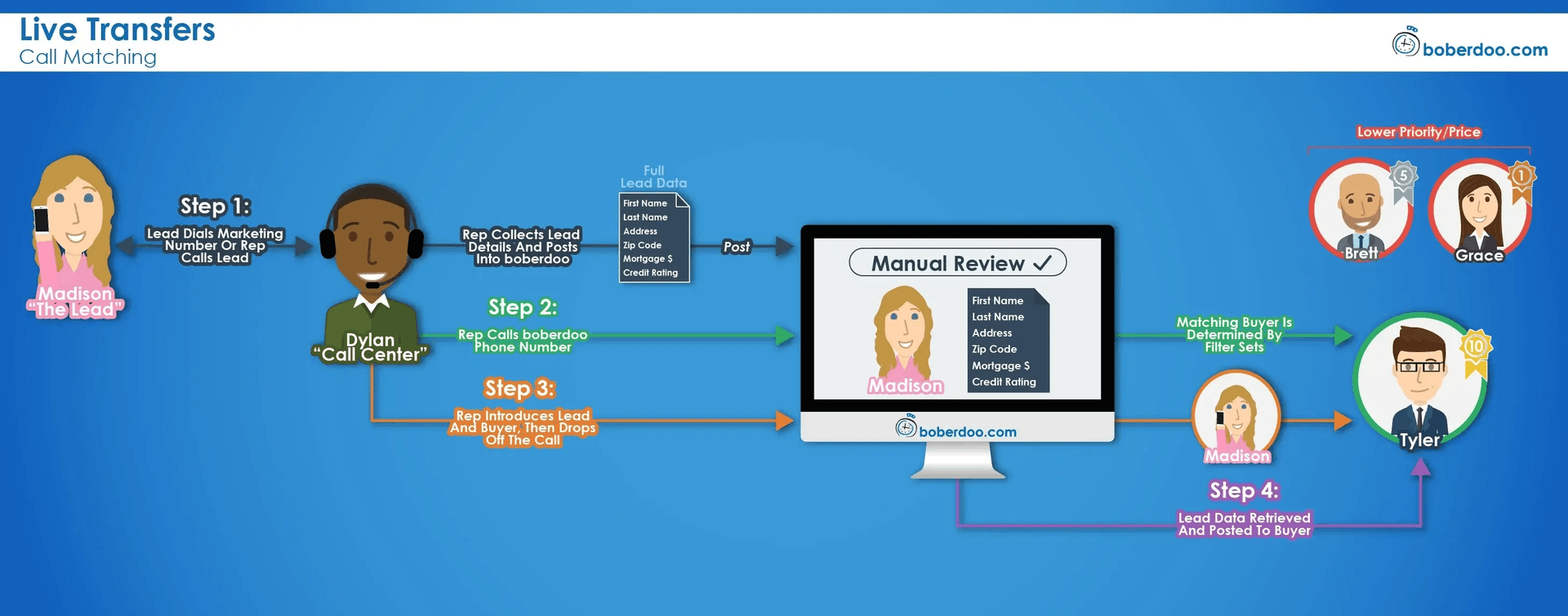
Qualification
The rep confirms the lead meets specific criteria, gathering essential information and confirming their interest in the product or service.
Introduction
The rep dials the buyer, introduces the lead, and ensures a smooth handoff between the caller and the buyer.
Data Sync
The buyer receives the full lead details (data lead) simultaneously with the call, ensuring accurate and complete information transfer.
Why Are Live Transfers Used?
Live transfers allow lead companies to leverage call centers to generate or improve call quality. A call center rep can either dial out to potential leads to generate a phone lead or field inbound calls before transferring them to call buyers. Once connected to a lead, the call center reps qualify the leads and ask them additional questions with the intention of providing these details to the call buyer. Finally, the call center rep provides a personal introduction between the lead and the call buyer, smoothing the transition as the lead is passed along.
Call sellers like utilizing live transfers because they allow call centers to weed out bad callers and improve the quality of good callers. This ultimately improves the lead company's call quality and the premium they can charge for their calls.
Final Expense Live Transfer Leads
Make sure the prospect is of age and genuinely interested in a policy before transferring to the buyer.
Live Transfer Moving Leads
Connect with customers exactly when they are ready to book a carrier, ensuring high-intent conversations.
Live Transfer Real Estate Leads
Link motivated buyers or sellers directly to agents in real-time for faster closings.
Discover the Power of Live Transfers
Sophisticated call routing software should give you several options when it comes to live transfers. Live transfers in the boberdoo lead and call distribution system can be handled three different ways.
Live Transfers With Call Matching (Standard Live Transfers)
When using live transfers with call matching, the live call is transferred and routed to the buyers based on the phone information of the lead. This means that the lead's area code (or other information collected through an IVR) is used to determine exactly which buyer the call will be routed to. Although the call center rep collects additional information from the lead that eventually is routed to the buyer, this additional information does not influence the routing logic of the live call. Learn More About Live Transfers with Call Matching (Standard Live Transfers).
Live Transfers With Data Matching (Full Response Method)
When using live transfers with data matching (full response method), the live call is transferred and sold to the buyer based on the data collected by the call center rep during the initial call. After the call center rep collects the information from the lead, the rep submits the complete data lead into the boberdoo system. All of the lead details are posted into the boberdoo system to find a single matching lead buyer. boberdoo then returns the matching buyer's information back to the call center rep, so the rep can transfer the call to the buyer that received the data. Learn More About Live Transfers with Data Matching (Full Response Method).
Live Transfers With Data Matching (Ping Post Method)
*This method requires extensive system customization and custom training. Please contact support to discuss your options before committing to this method.*
When using live transfers with data matching (ping post method), the live call is transferred and sold to the buyer based on the data collected by the call center rep during the initial call. For example, if the call center rep collects the lead's zip code, mortgage amount and credit rating, any or all of these fields are used to determine the best buyer before a call into the boberdoo system is placed. This is done by pinging partial lead details into the boberdoo system and to your network of buyers in order to collect and sort the best available buyers. Learn More About Live Transfers with Data Matching (Ping Post Method).
Explore boberdoo Call Routing
Seamlessly connect leads with buyers in real time through automated live call transfers and intelligent routing. Start optimizing your call flow today.
Getting Started With Live Transfers
If you'd like to start selling live transfers using the boberdoo lead distribution system, we'd love to help you get started. Your first step is determining which of the live transfer options above you'd like to utilize. If you'd like to discuss which option is the best for you, we'd be happy to help.
If you are currently using the boberdoo system, please create a support ticket to get started. If you are not a boberdoo client, fill out our contact form and we can schedule a time to review your options.
Tips & Must Knows When It Comes To Live Transfers
Beyond the technical definitions, the one thing people really need to know about live transfers, and the thing that usually determines if they succeed or fail, is The Handoff Gap. When a lead is transferred, there is a 3-10-second window that can make or break the call. If the caller feels like they are being sold or passed around like a hot potato, they hang up. Here are the important details that separate profitable live transfer operations from the ones that lose money:
The "Warmth" of the Handoff
A "cold" transfer (just ringing the buyer's phone) kills conversions. A truly effective live transfer requires a three-way introduction where the agent says: "Hi [Buyer Name], I have [Lead Name] on the line. They are looking for a quote on final expense insurance and they meet all our criteria. [Lead Name], meet [Buyer Name], who is an expert in this." This professional handoff instantly transfers the trust the agent built to the buyer.
TCPA Compliance Is Non-Negotiable
If you are dealing with live transfer leads, you must have an ironclad audit trail and make sure that your business is following all the rules of the TCPA for phone calls. Proper consent must be obtained and documented throughout the transfer process.
Billable Seconds
When it comes to live transfers in real estate leads or moving leads, buyers usually don't pay the moment they pick up the phone. They typically pay based on a buffer or duration. Example: A lead might only be considered "billable" if the call lasts longer than 90 seconds. Why it matters: If your buyers are complaining about lead quality, check your call durations. Short calls usually mean the "handoff" was clunky or the lead wasn't properly qualified before the transfer.
Data Syncing
The buyer needs to see the lead's data on their screen the second the phone rings. If a buyer has to ask, "Wait, what was your zip code again?" after the call center rep just spent 5 minutes collecting it, the lead gets frustrated. Systems (like boberdoo) "post" the data to the CRM at the exact moment the call is routed.
Live Transfer FAQs
A live transfer is the process of handing off a live call between a lead and a call center representative to a final call buyer. The call center rep typically qualifies the lead, introduces the lead and the buyer, and then drops off the line, with the full lead details being sent to the buyer as a data lead.
Live transfers are used to leverage call centers to generate or improve the quality of calls. Call sellers utilize them because the call center can weed out bad callers and perform lead qualification, which ultimately improves the lead company's call quality and the premium they can charge for the call.
The three options are: 1) Standard Live Transfers, which route calls based on phone information and area code. 2) Live Transfers With Data Matching (Full Response Method), which routes based on the complete data collected by the rep. 3) Live Transfers With Data Matching (Ping Post Method), which pings partial lead data to your buyer network for real-time matching. The Ping Post Method requires extensive system customization.
The Full Response Method routes the call based on the full data collected by the call center rep. The rep submits the complete data lead into the boberdoo system, which finds a single matching buyer. The buyer's information is returned to the rep, who then transfers the call to that specific buyer.
Ready to Get Started With Live Transfers?
Contact our team to discuss which live transfer method is right for your business, or request a demo to see boberdoo in action.